


Thermal Transfer Printing Explained: Key Features & Applications
Labels are used to identify products, ship them, manage equipment, and package goods at retail stores. However, often a label has more requirements than just displaying information: it should be readable after being handled, stored, transported, or over time.
Thermal transfer printing creates clear text, barcodes, and other printed information on compatible label materials using ink transferred from a ribbon. The durability of its print makes this method suitable when labels have to stay legible over time.
Whether you're managing logistics and identifying outdoor equipment, creating essential oil bottles, perfume packaging, or jewelry labels – thermal transfer printing provides a convenient solution that allows you to create professional-looking labels for various business needs.
1. How Does Thermal Transfer Printing Work?
Thermal transfer printing utilizes heat to print ink from a ribbon onto a label. This is different than inkjet printing that sprays liquid ink onto a surface; instead it employs a heated printhead with a thermal transfer ribbon for creating printed content.
In printing, the printhead will heat certain parts of the ribbon based upon the digital design. Ink then transfers onto the label material as text, numbers, barcodes, symbols, or other graphics.
This process has three main steps:
Heat: The printhead applies heat to selected areas of the ribbon.
Transfer: The ribbon transfers ink onto the label surface.
Print: The transferred ink forms the desired text or graphics.
Since it is using a ribbon, this technology allows for producing more than standard black text. Different ribbons (depending on the printer, its compatibility with the ribbon and label material) allow you to make labels with different visual effects.
The difference between thermal transfer printing and direct thermal printing: The former produces an image using a heat sensitive coating directly on the label without requiring a ribbon; whereas in thermal transfer printing, a ribbon transfers the ink onto the label which makes it applicable with a wide variety of compatible labels.
2. Key Features of Thermal Transfer Printing
1. Clear and Precise Printing
The thermal transfer print provides sharp text, numbers, and graphics. It can provide clear barcodes and QR codes with proper printer resolution and suitable materials, which allows product identification and information tracking.
Clear printing becomes crucial if there are small product details on a label such as batch number, serial number, etc., or information that must be scanned; well-defined characters and barcode lines will make labels easy to read and identify.
2. Durable Printing That Stays Readable
A key advantage of thermal transfer printing is durability in printed information. Using appropriate ribbons and label materials, printed content provides good resistance against smudging and abrasion which allows labels to be easily read through regular use and storage.
It's especially beneficial when it comes to labels that must remain on a product, package, container, or equipment over an extended period. The clear, durable print reduces the chance of crucial information being hard to read.
For businesses, this ensures product codes, identification numbers, and all other necessary details will be available throughout the expected lifespan of the label.
3. Different Ribbon Colors for More Labeling Options
Thermal transfer printing isn't only available in black text – with various printers and compatible ribbons, businesses have access to multiple ribbon colors so they can make labels that fit better within their packaging, products, or identification system.
Black printing provides a clean, professional look when creating shipping and inventory labels; other colored ribbons allow product information to pop or compliment the styling of perfume bottles, essential oil containers, and jewelry packaging.
Colorful printing allows you to visually organize your business by distinguishing between product categories as well as providing consistency throughout your product line.
3. Which Industries Benefit from Thermal Transfer Labels?
Labeling challenges vary across industries. Some require durable labels for frequent handling; some require identifying information which is legible in varying temperatures or after long periods of product storage. Many such requirements can be met with thermal transfer printing using appropriate label materials and ribbons.
1. Logistics and Warehousing: Labels That Withstand Handling
Packages and inventory items pass through various stages of logistics such as sorting, stacking, transportation and warehouse storage where they are subject to labels being rubbed by other packages, handled repeatedly, or subjected to friction with packaging materials and equipment.
Smudged or damaged printed information makes scanning barcodes difficult and complicates package identification and locating inventory. For this reason, it's important for logistics labels have clearly printed text which has good resistance to everyday rubbing and handling.
Thermal transfer printing provides an excellent solution here since there are compatible ribbons and label pairs available that will provide durable text and barcodes that stay readable during routine logistics operations.
Common thermal transfer label applications include:
Shipping and package identification labels
Warehouse inventory and shelf labels
Product and carton barcode labels
Batch numbers and tracking labels

2. Outdoor Identification: Labels for Changing Temperatures
Outdoor equipment and facilities face varying environmental conditions. Labels in some locations will be subjected to strong sunlight, rain, moisture, hot summers or cold winters.
Such conditions present challenges to long term identification. What is a good indoor label might not work for equipment subject to extreme temperatures or extended outdoor usage. Businesses require labels which stay readable and attached as they would be used at their installation sites.
Thermal transfer printing helps achieve outdoor identification using appropriate label materials, ribbons and adhesives. Right combination protects printed information from abrasion and if specifically rated – other environmental stresses.
Common thermal transfer label applications include:
Outdoor equipment identification labels
Electrical enclosures and facility labels
Asset identification and maintenance labels
Pipe and infrastructure identification labels
In case of high/low temperatures: Check the operating temperature range of both the label material and adhesive. Make sure that the entire label is suitable in its real environment (not only during the printing).

3. Essential Oils & Perfumes: Labels for Premium Products
Labels for essential oils, perfumes, and jewelry must contain both clear information about their products but look appealing as well. These types of products present some unique challenges when it comes to labeling materials.
Bottles containing essential oil could encounter oily residue from filling, using, or handling them. Perfume packages might face spills or frequent wiping. Jewelry products on display at retailers might stay under bright lights for extended time.
For such cases, businesses want neat-looking labels where key information is easily legible. Oil resistance, print durability, and resistance against prolonged light exposure may vary depending on the type of product and its environment.
Using thermal transfer printing makes it easy to add product name, ingredient info, batch code, and branding details. With proper selection of a ribbon and label material, the printed content provides good resistance to everyday handling and rubbing.
Common thermal transfer label applications include:
Essential oil bottle labels
Perfume bottle and fragrance product labels
Jewelry price and product identification labels
Small product labels with batch or item information
Products that are subject to oils or long periods of display lighting require verification for label surface, adhesive, and ribbon compatibility. All combinations do not have equal levels of oil resistance or lightfastness.

4. How to Choose a Thermal Transfer Label Printer
Selecting your thermal transfer label printer: Consider what size label you need; how much info you print; the details needed; and where the labels will be used. The print resolution matters greatly when printing small text or detailed graphics; compatible ribbons and label materials have a major impact on print durability. Two great options if you're looking for flexibility with label sizes and clear, professional results are the NIIMBOT M2 and M3.
NIIMBOT M2 Label Printer
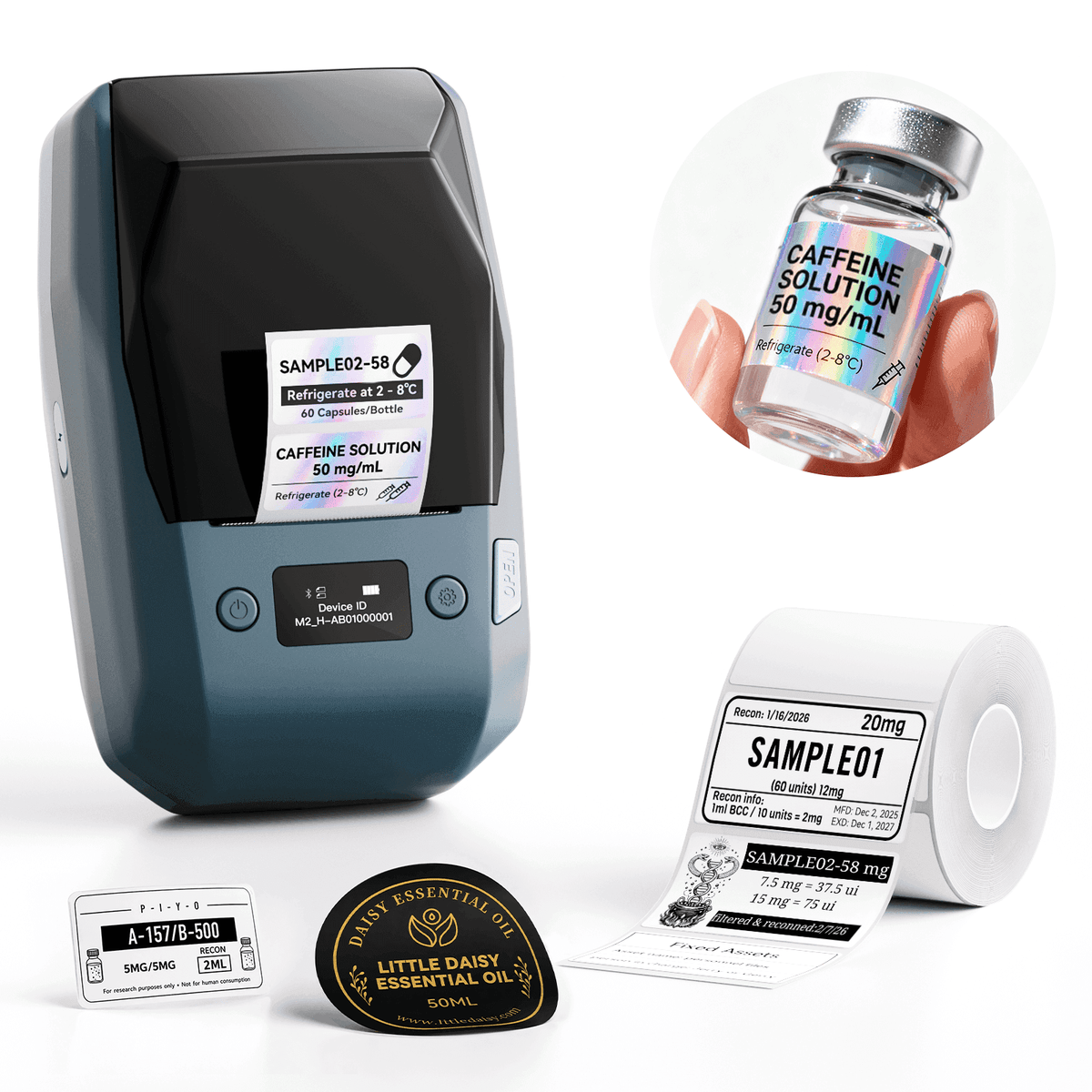
The NIIMBOT M2 is an option for businesses that need clear printing and flexible label widths for everyday product identification and organization.
Suitable for exploring: Product identification, small-item labeling, and everyday business labeling tasks.
NIIMBOT M3 Label Printer

The NIIMBOT M3 offers a wider printing range, making it worth considering when a business needs more flexibility in label width for different products and labeling tasks.
Suitable for exploring: Different product label sizes, wider labels, and business labeling tasks that require more layout flexibility.
Conclusion
The thermal transfer printing technology provides an effective solution when you need clearly written text with durable printed information on flexible label design. Whether used in logistics or identifying outdoor equipment, from essential oils and perfumes to jewelry packaging – this technology can serve many different business labeling needs.
Selecting the proper printer is just the beginning; the choice of label material, ribbon, adhesive, and environment will all affect the end result. Match them up with your application so that you get professional-looking labels which maintain readability of essential information through their entire use life.
FAQ
1. Does Thermal Transfer Printing Need Ink?
Thermal transfer printing typically does not require liquid ink cartridges; instead, it requires a thermal transfer ribbon containing ink. Heat from the printhead transmits this ink to a compatible label material. Ribbons and labels used by your printer need to be compatible with the particular device.
2. Can Thermal Transfer Labels Be Used Outdoors for Long Periods?
Yes, thermal transfer labels may be appropriate for long periods of time outdoors if the entire structure of the label is designed for the environment. Consider the label material, ribbon, adhesive, temperature range, and resistance to sunlight and moisture. Testing under actual operating conditions is recommended for critical outdoor identification.
3. Are NIIMBOT M2 and M3 Thermal Transfer Label Printers Suitable for Small Businesses?
Yes. The NIIMBOT M2 and M3 are available as an option for small businesses who want simple, professional-looking labels on products for identification or inventory purposes, among others. They both have a 300 dpi printing resolution but the M2 has a print width from 20 – 50 mm whereas the M3 can go up to 20 – 78 mm. It is important to check ribbon and label compatibility in your application when selecting which one you will use.


Leave a comment